_(1).png)

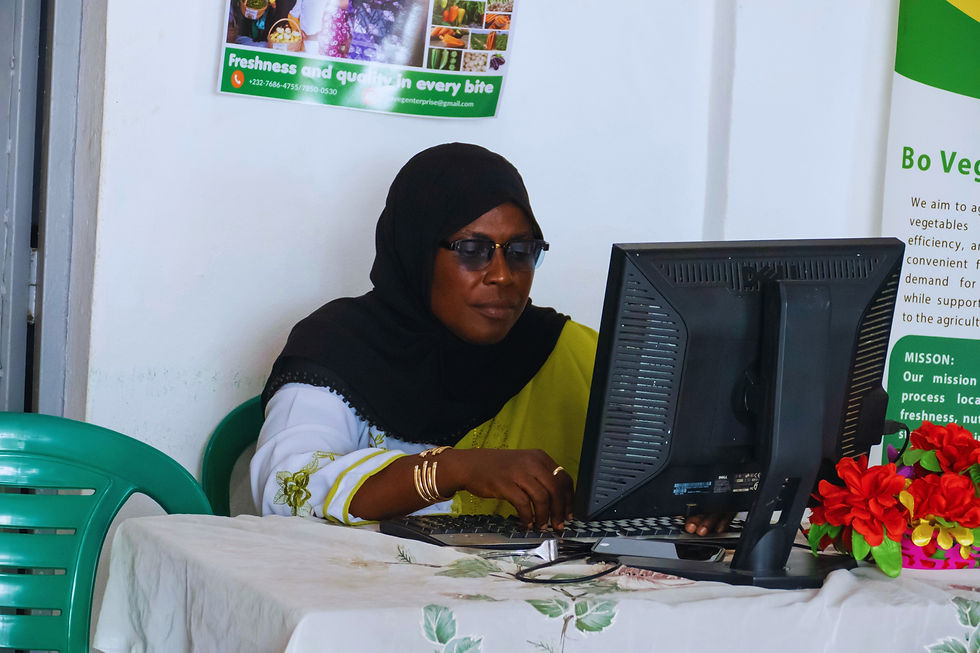
Jenneh Foday, CEO and General Manager of Bo Vegetable Enterprise
- Muhammad Kamran

- Nov 28, 2025
- 3 min read
Updated: Dec 9, 2025
From Small Initiative to National Impact: The Rise of Bo Vegetable Enterprise
In Sierra Leone, many women farmers face limited access to tools, storage, and markets, affecting productivity and income. Bo Vegetable Enterprise, led by CEO Jenneh Foday, is changing this by empowering women through large-scale vegetable farming, improving market access, and reducing post-harvest losses building a more resilient and inclusive agricultural sector.

Meet Jenneh Foday
Bo Vegetable Enterprise, founded in 2019, led by CEO and General Manager Jenneh Foday, is a women-driven partnership transforming vegetable farming in Sierra Leone. Located along the Bo–Kenema Highway, the enterprise was born from Jenneh’s vision to improve the lives of women in her community by engaging them in large-scale vegetable farming, reducing post-harvest wastage, and creating economic opportunities. What started as a small initiative has grown into a vibrant network that empowers farmers, strengthens food systems, and enhances livelihoods across the country.
Innovation Rooted in Community
From the beginning, Jenneh focused on building a strong community of out growers. Today, Bo Vegetable Enterprise works with seven farming communities, each with 20 out growers including 15 women and five men supported with quality seeds and tools to ensure better harvests and incomes.
Women also play leading roles in sales and distribution, selling vegetables weekly at local markets and supplying central markets in Bo and beyond. The enterprise not only produces its own vegetables but also buys from local farmers to ensure no harvest goes to waste.
Operational Barriers
Before the intervention of the International Labour Organization (ILO) through the Opportunity Salone Project, the enterprise faced several challenges limited production due to lack of inputs, no storage facility leading to spoilage, absence of dryers or processing machines, and limited manpower with only seven staff. The team also lacked business training and technical support to scale effectively.
Pathways to Prosperity
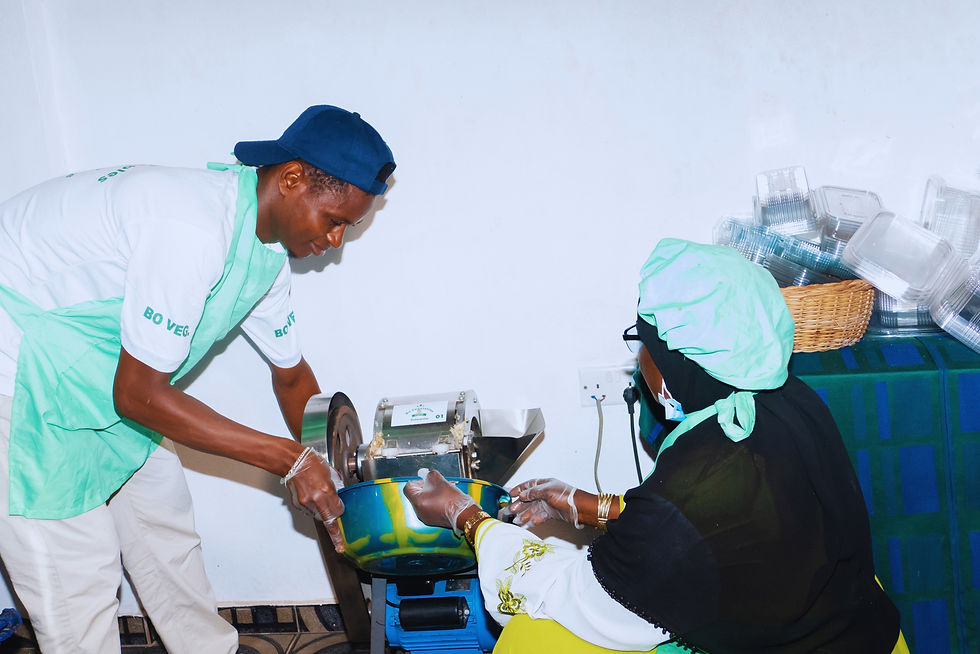
With ILO support, Bo Vegetable Enterprise upgraded operations by installing a cold room, a solar system, and expanding staff from 7 to 15 permanent workers with trained service providers. Outgrowers grew from 7 groups to 107 trained farmers, and markets expanded to Kenema, Freetown (Family Kingdom, Mile 91), and beyond. Through the GET Ahead financial training, Jenneh and her team strengthened management, planning, and recordkeeping, The ILO also provided them machinery for grinding, cutting, and processing boosted efficiency and value addition.
Bridging SMEs and Market

Bo Vegetable Enterprise has built strong partnerships to boost market access. Through MOUs with sales agents, the enterprise ensures transparent transactions and reliable payments. It also partners with Come and See Women in Lungi, led by Mary Mane, exchanging vegetables and onions a model of how women-led agribusinesses strengthen value chains across Sierra Leone.
“ILO has opened ways for me through capacity building. The Opportunity Salone Project is truly a game changer.”

Driving Impact
Driving ImpactBo Vegetable Enterprise shows how training, tools, and strategic support can grow women-led agribusinesses. With stronger systems and partnerships, it is creating jobs, expanding reach, and empowering women and youth, making Sierra Leone’s vegetable sector greener, more resilient, and full of opportunity.
By the Numbers
Staff: 7 → 15 permanent workers
Out growers: 7 groups → 107 trained farmers
Facilities: Cold room + solar system installed
Tools: Machinery for grinding, cutting, and processing
Markets: Bo, Kenema, Freetown (Family Kingdom, Mile 91), and other regions
Partnerships: Formal MOUs with agents; B2B trade with “Come and See” (Lungi)


Comments